
5 Smart Solutions for Small Living Rooms
Updated August 20, 2026
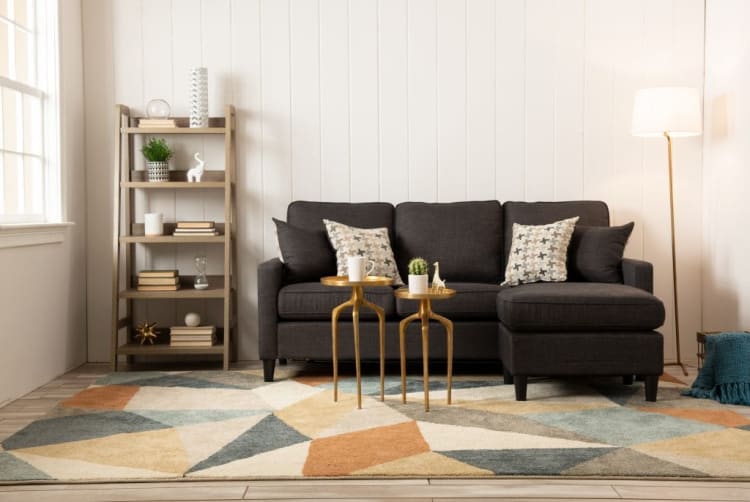
Just because you live in a small space doesn't mean you have to sacrifice style! With a little creativity, and the right furniture, you can make your small living room both stylish and functional. In 2026, the biggest design direction for compact rooms is all about warm minimalism: think cozier textures, richer earth-tone palettes, and intentional layouts that make every piece earn its place. Gone are the days of stark, cool-gray spaces crammed with undersized furniture. Today's small living rooms feel personal, tactile, and surprisingly spacious when you make smart choices.
Here are five simple space-saving seating and storage solutions for small living rooms.
Pick the Right Sofa
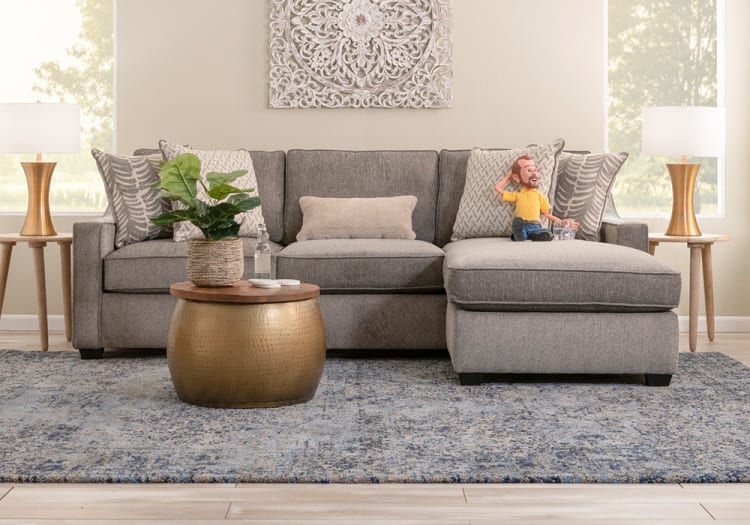
Make sure you choose the right sofa for your space. Don't pick something that is too big because it will overpower the room and won't leave you much extra space for tables, lamps, and other furniture. On the other hand, you don't want to choose too small of a sofa because you want to have an adequate seating area for your family and friends.
In 2026, compact modular seating is one of the hottest trends for small rooms. Look for loveseats, slim-profile sectionals, or modular sofas that let you rearrange pieces as your needs change, perfect for movie night one evening and a gathering with friends the next. Browse our collection of affordable sofas and couches for small spaces to find the right fit. Low-profile silhouettes with narrower arms, slimmer legs, or even armless designs help preserve light and movement in a tight space, making the whole room feel more open.
Curved and rounded furniture is also having a major moment right now. A sofa with softly rounded edges or a gently curved silhouette can make a small living room feel less boxy and more inviting. These organic shapes guide the eye around the room rather than stopping it at sharp corners, which is a subtle but powerful trick for making compact spaces feel larger.
A sofa with a built-in chaise is a perfect option for small living rooms because the chaise gives you a little extra lounging space and often includes a hidden storage compartment, which brings us to our next point.
What size sofa actually fits a small living room?
A common question, and the answer depends on your room's dimensions. As a general rule, measure your space first and look for sofas that leave at least 18 inches of clearance for walkways around the piece. In most small living rooms, a loveseat (roughly 50–70 inches wide) or a compact two-piece sectional works best. Avoid deep-seated sofas that jut far into the room, and instead look for shallower seat depths (around 20–22 inches) that sit comfortably without eating up your floor plan. You can even use our room designer tool to plan your layout before you buy.
Select Multifunctional Furniture
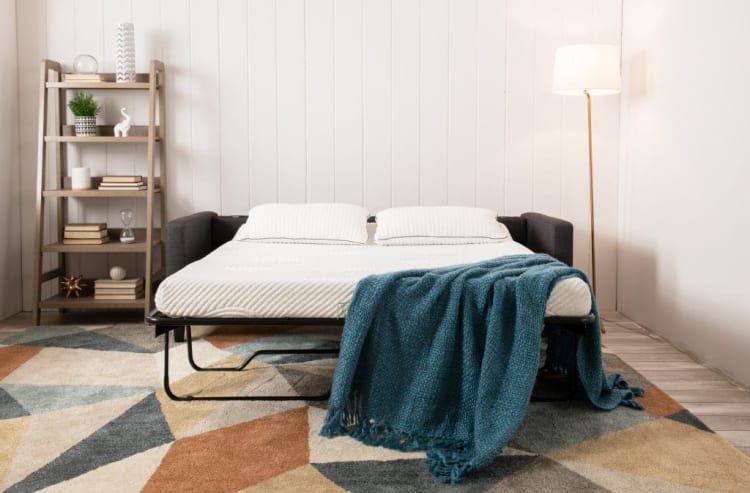
Since space is at a premium, make sure you maximize every inch of your room by selecting multipurpose furniture. Don't just shop for a sofa, look for sleeper sofas. Sleeper sofas provide seating during the day and can instantly transform into a bed at night without taking up much extra space. This is especially helpful if your small living room doubles as a guest room.
Multifunctional furniture is one of the core design trends of 2026, and the options have never been better. Storage ottomans that open to stash blankets and remotes, lift-top coffee tables that become a workspace or dining surface, and media units with hidden compartments all help keep your floors clear and your room looking calm and edited. Explore our small spaces furniture collection for compact living to find pieces designed specifically for tight rooms.
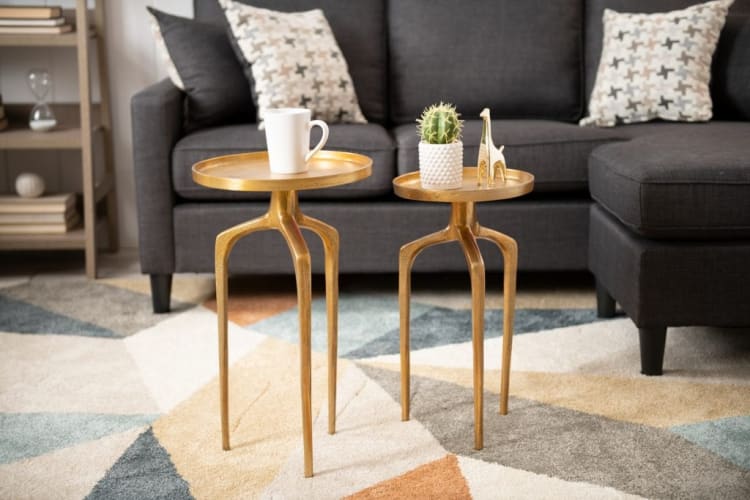
Tables can also serve multiple functions. Look for tables that work as a small coffee table and double as an end table. Want to add a little fun to your space? Try nesting tables, they tuck neatly together when you don't need them and spread out for extra surface area when you're entertaining. Nested and stacking tables are a staple of smart small-room design right now because they adapt to whatever your day demands.
Does multifunctional furniture actually look stylish?
Absolutely, and that's one of the biggest shifts in recent years. Today's multifunctional pieces are designed to look just as good as single-purpose furniture. You'd never guess that a beautiful upholstered ottoman hides a full storage cavity inside, or that a sleek coffee table lifts to reveal a workspace. Manufacturers have caught up with the demand for small-space solutions, so you no longer have to choose between form and function.
Utilize Vertical Storage
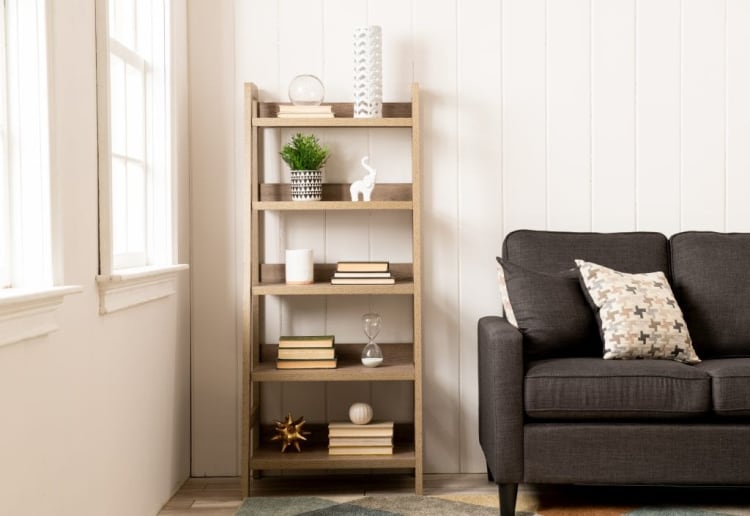
A small shelf is a great way to add storage without taking up too much floor space. With multiple shelves, you have plenty of room for books, photos, and trinkets. Leaning bookshelves and ladder-style shelving units are especially smart picks because their narrow footprint keeps pathways clear while drawing the eye upward, making your ceilings feel taller in the process.
In 2026, designers are emphasizing more intentional layouts with integrated and vertical storage as a key strategy for small rooms. The idea is fewer pieces on the floor and more organization going up the walls. Floating shelves, wall-mounted cabinets, and tall narrow bookcases all let you display your favorite things without cluttering precious square footage.
Here's a styling tip: keep your shelves edited. The 2026 approach to decor is calmer and more curated, think one or two sculptural focal points on each shelf rather than cramming every inch. A mix of books, a small plant, and one meaningful object per shelf looks intentional and keeps the room feeling open.
How do you make a small living room feel bigger without renovating?
Beyond vertical storage, there are a few easy tricks. Use fewer, larger pieces instead of many small ones, it reduces visual clutter. Keep pathways clear so the room feels open and easy to move through. Lean into a warm, cohesive color palette (caramel, mocha, soft olive, or muted beige tones are all popular in 2026) rather than high-contrast schemes that can chop up a small space. And layer your lighting, more on that below, to eliminate dark corners that make rooms feel smaller than they are.
Choose the Perfect Rug
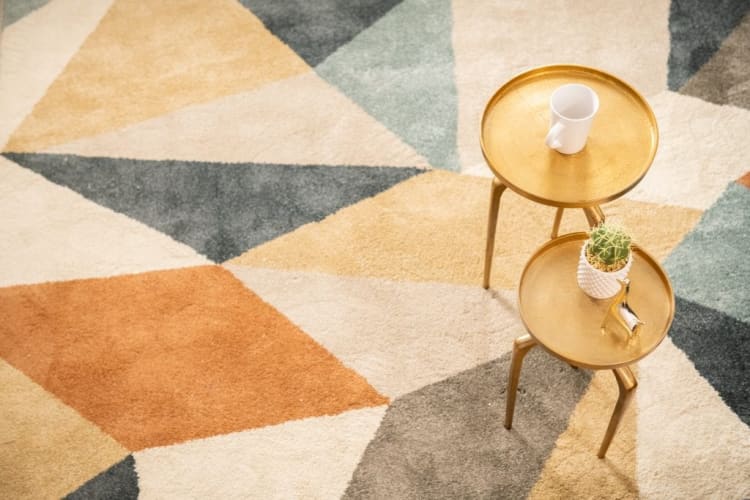
Don't underestimate the power that a rug can have on the feel of a room. Choosing a rug that fits under all your pieces, or at least under the front legs of your sofa and chairs, can help define the space and make it feel larger and more intentional. A rug anchors your seating area and creates a visual zone, which is especially important in an open-concept layout where your living room flows into other areas.
A rug can also help set the tone for the entire room. In 2026, texture is doing the work of color. Nubby, high-pile rugs, washed linen weaves, and soft organic patterns in warm neutrals add richness without visual clutter. If you love bold design, a geometric pattern in earthy tones can add personality while keeping the room grounded. Think warm caramels, muted greens, soft terra cottas, and creamy beiges, these tones are defining the shift away from cool grays this year.
For small rooms specifically, avoid rugs that are too small for your seating area. A rug that floats in the center of the room without touching any furniture can actually make the space feel more cramped. When in doubt, go slightly bigger, it's one of the simplest ways to make a small room feel more generous.
Select the Right Lighting
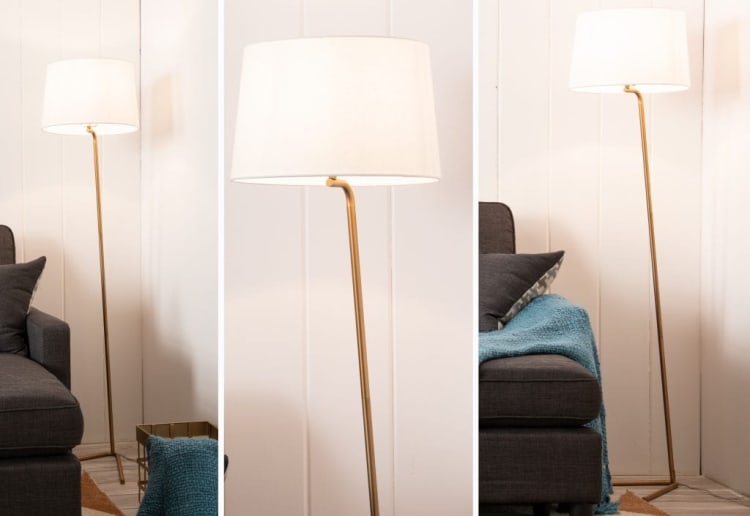
A dark corner in any room can make the space feel cold and unwelcoming. Make sure you select proper lighting that will illuminate the space while also maintaining a sense of warmth and calmness. If you don't have room for end tables, try tucking a floor lamp in the corner, a slim-profile lamp with a warm-toned shade can brighten a dead zone without taking up much space.
In 2026, statement lighting remains a top priority for small living rooms, but the approach has shifted toward layered lighting. Instead of relying on one harsh overhead fixture, designers recommend combining two or three light sources at different heights: a floor lamp for ambient glow, a table lamp on a shelf or side table for task lighting, and perhaps a sculptural wall sconce for a touch of personality. This layered approach fills the room with warm, even light that makes compact spaces feel larger and more inviting. Browse our stylish living room furniture and accessories to find lamps and accents that complete the look.
Look for lamps with warm-toned bulbs and organic or sculptural shapes, they double as decor while doing their job. And if you're tight on surface space, wall-mounted sconces and plug-in pendants are a great way to add light without sacrificing a single inch of floor or table real estate.
What color palette makes a small living room feel cozy but not cramped?
This is one of the most common questions for small-space decorating, and the current answer is warm minimalism. Swap cool grays and stark whites for a richer, more grounded palette: soft caramel, mocha, olive, warm beige, and muted earthy browns. These tones wrap a room in warmth without closing it in. Layer in texture through boucle cushions, linen throws, chenille blankets, or soft leather accents, they add depth and coziness to a small room without the visual weight of loud patterns or heavy color blocking.
We'd love to see how you've styled your small living room. Please share your photos and make sure to tag @mybobs for a chance to be featured on our feed.
Small Spaces, Smart Solutions
Looking for more fun and affordable ideas for small spaces? Check out our other posts:
7 Stunning Ways to Style Your Entryway
7 Space-Saving Tips to Maximize Your Small Dining Room