
Heroes at Home: Jonathan Tilley

Jonathan TilleyRinggold, VAEMT for the Halifax County Rescue SquadEmergency Services EducatorEMT for Virginia International RacewayVolunteers Firefighter and EMT, Ringgold Volunteer Fire Department
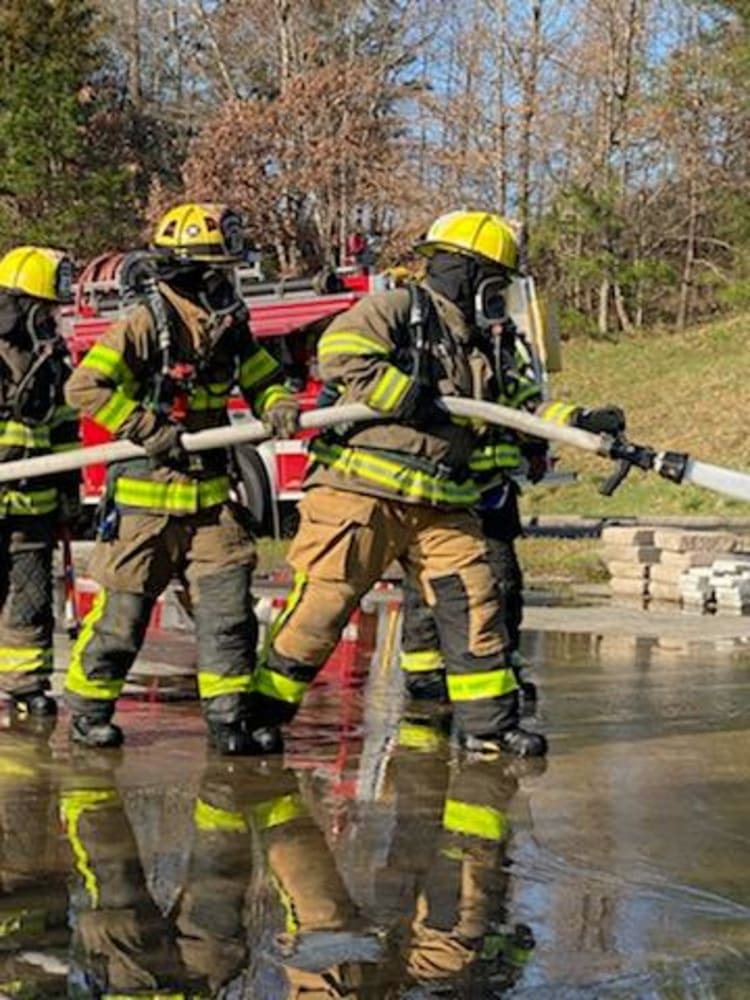
While we all have 24 hours in a day, Jonathan Tilley spends most of them in service of others — both working and volunteering as an EMT, emergency services educator, and firefighter for his community.
Jonathan started his EMT career at just 16 years old as a volunteer in a junior membership program. He landed his first paid gig in 2013 but never gave up volunteering. In fact, Jonathan volunteers 96 hours a month, making him a true hero!
What drew you to this kind of work? What do you enjoy most about your work or volunteer service?
No two days are the same — and it’s rewarding getting to help people at what may possibly be their worst time of need. The opportunity to teach and instruct others [in emergency service skills] has [also] been absolutely amazing. The field is always advancing — there’s always new protocols, and the CPR organization, the American Heart Organization, is always putting out new continuing education and ways to do life-saving interventions.
Can you share a moment or experience that made you especially proud?
Early recognition is in everything I do. There are activations we can make as a provider that sometimes truly make a difference in the life-saving interventions that a patient will receive. These two activations are called stroke activation and myocardial infarction activation, when a patient is either suffering from a neurological emergency like a stroke or suffering a severe heart attack — the sooner we realize those symptoms, the sooner we make those activations and then transport patients to a higher care facility or helicopter them to a higher care facility. I’ve had [to make] several activations over the years — two in the last month, one stroke and one myocardial fraction activation — and those make me especially proud, especially in hearing the final outcome of the patient.
What and/or who has influenced or inspired the way you serve others?
I’ve got four children [my] two 13-year-old girls have expressed interest in coming to the squad and learning what the equipment is and what life-saving measures they provide a patient. I’ve brought them along to wash trucks with me or clean up the station or help with fundraisers, and they love being at the rescue squad e — I see both girls getting involved in the field in the near future, and that inspires me more than anything, knowing that they have such a bright, promising future in this if they decide to pursue it.
Additionally, my late father, who was a truck driver for the Pepsi Cola Company, actively volunteered for an organization in this county called God’s Pit Crew — they provide disaster relief [in the case of] major storms, earthquakes, hurricanes and things like that. My dad had all kinds of trophies [when I was] growing up — [things like] ‘Most Miles Driven’ because he had his CDL [license]. He drove supplies to these disaster relief areas. Seeing him drive as a volunteer outside of work really inspired me.
![Jonathan T., an EMT, emergency services educator, and firefighter, wearing a blue Site Medic helmet and orange safety vest. Text reads: "Knowing that a patient came out [of emergency service] successfully is always rewarding. HEROES at HOME. BOB'S Discount Furniture. JGR. © 2025 Joe Gibbs Racing, LLC." This banner highlights the rewarding nature of emergency medical work and promotes the Heroes at Home campaign.](https://res.cloudinary.com/mybobs/image/upload/q_auto,f_auto,w_750/v1768945444/2025_11_Hero-Bio-Social-Co-18-1024x1024)
What’s one thing you wish more people knew about the work you do or the people you serve?
I spend a lot of time away from home and away from my family, so that definitely makes it hard.
[I would also say that I wish people knew] the risk that we take on a day-to-day basis when we get in these ambulances and/or fire trucks. We may not know what we’re responding to at the time, and it’s dangerous to be responding to those emergencies. I just ask that everybody slow down and move over for lights and sirens, please.
If you could give one message of encouragement to your community, what would it be?
Love one another. In this day and age, there’s so much hate and crime, and you don’t know what somebody else is going through — so love one another.
Also, volunteers are needed — we’re in short supply. Visit your local fire departments, your rescue squads and ask them if they need anything. Even if you know blood and gore is not your thing, maybe you can help out for a benefit or fundraiser or something like that — so definitely stop into your local organizations and inquire about how you can help out today.
Recognition in emergencies can be pivotal — a patient can be considered braindead after six minutes without oxygen and with the time we’re dispatched until we can respond, six minutes can be gone really quickly — so starting CPR and life-saving first aid really helps us along the way. Ask your school or local fire squad if they offer CPR — get in a CPR class if nothing else.
If you were a piece of furniture, what would you be — and why?
I would want to be a recliner — because how can you be sad when you’re in a recliner? I aspire daily to bring that kind of joy in other people’s lives.
Do you have any “core furniture memories”?
It’s a piece of furniture that I inherited from my late father’s passing in 2021. There was a couch in my father’s living room that I took and made a memorial room for him and other deceased relatives — I’ve got a bunch of his trophies displayed over the years there, and sometimes I’ll lay on that couch and reflect on his accomplishments and it comforts me in the moment.
In your opinion — what’s the best way to build a furniture fort?
You’ve got to have stability — you can lay cushions on top of cardboard so it doesn’t cave in. Growing up me and my younger brother built forts out of cardboard — but yes, I would say you’ve got to have stability.