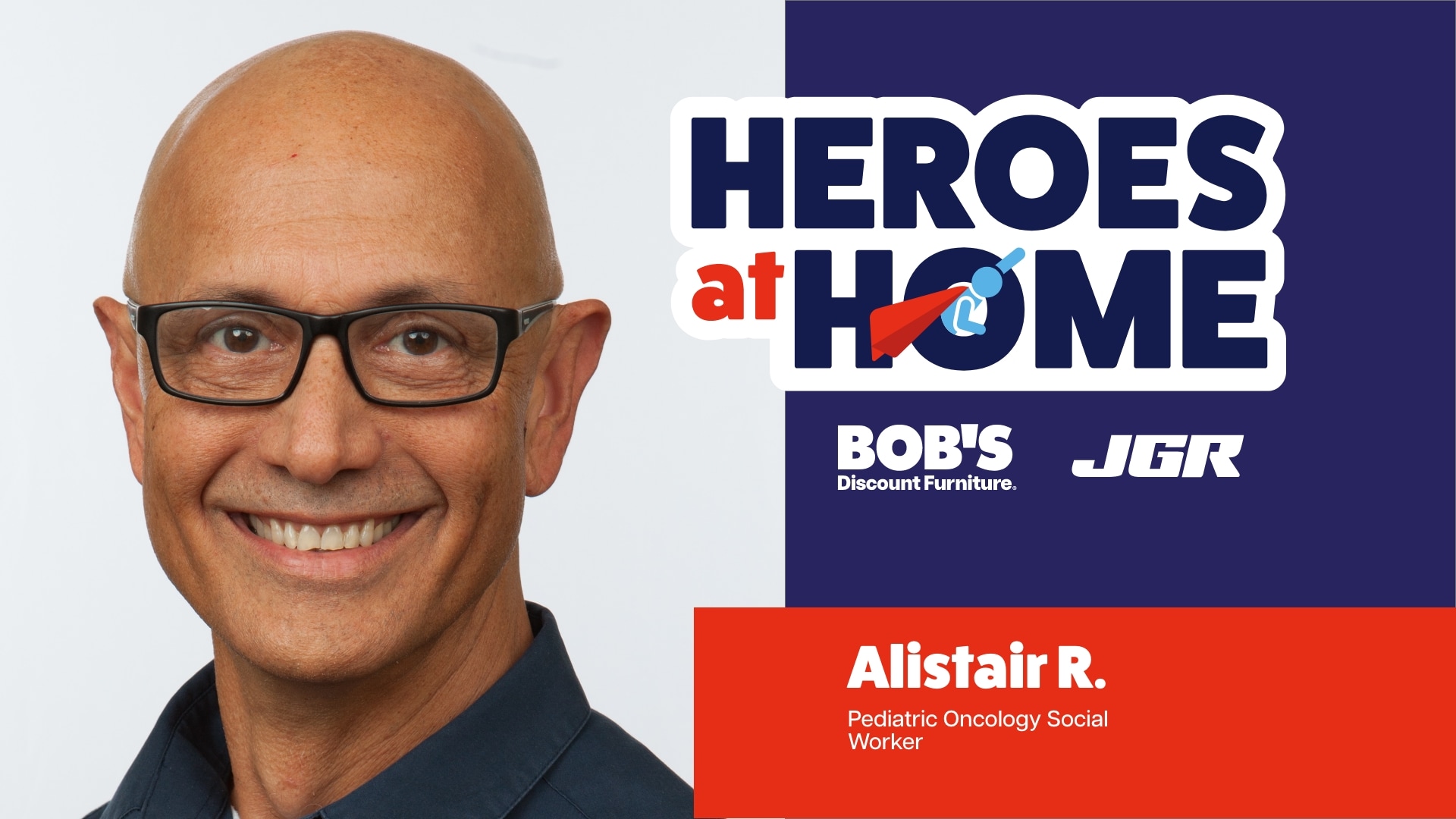
Alistair Robertson
Lives in Kingsburg, California
Originally from Grand Cayman Islands and Hollywood, CA before moving to Kansas and eventually back to California
Pediatric Oncology social worker at Valley Children’s Hospital in Madera, CA
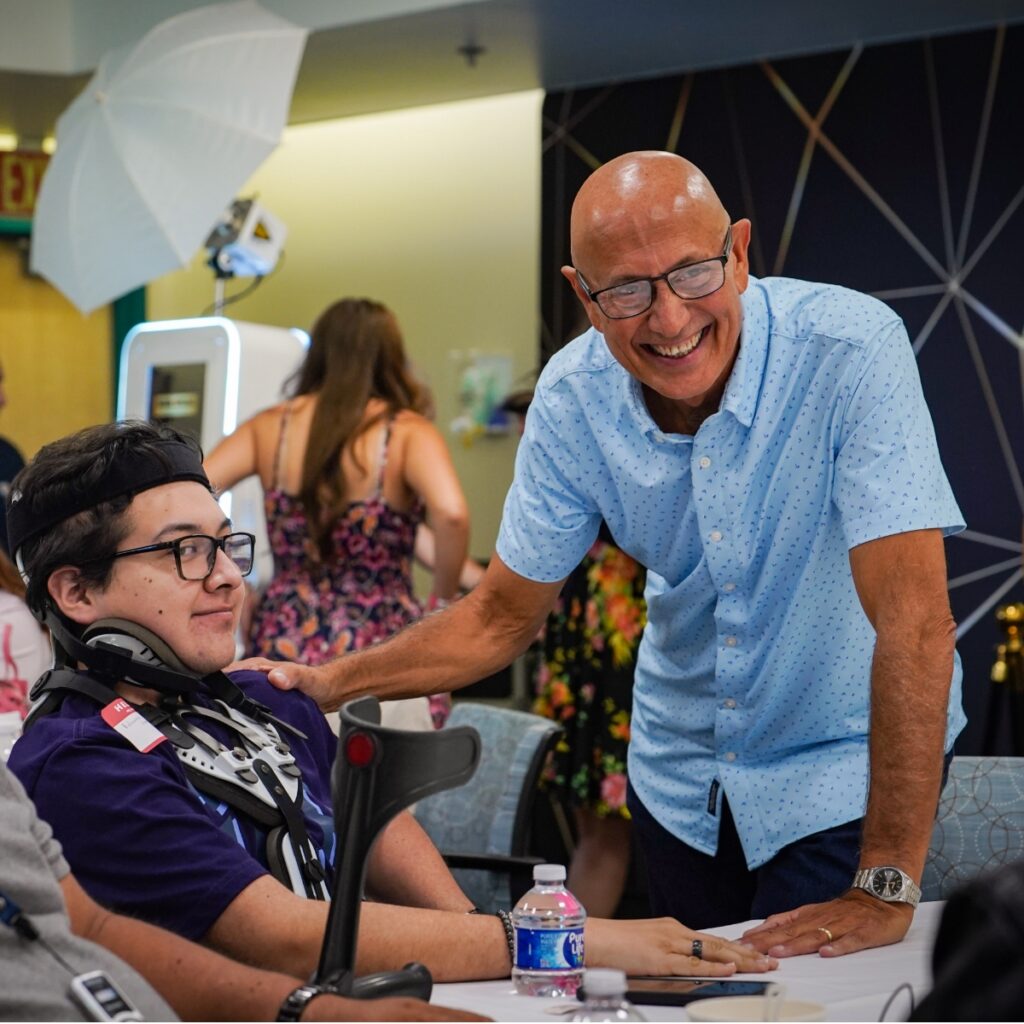
Alistair Robertson has spent his career doing heroic work as a social worker for kids and families dealing with cancer — but if asked, he considers the kids he works with the true heroes.
What drew you to this kind of work? What do you enjoy most about your work or volunteer service?
I really believe that we all have been blessed with gifts and talents — I’m just glad that I get to use my skills and talents to work with these amazing children and families. The biggest thing for me is that I get to be a part of helping to make a difference in their lives — to help empower them and get them to help themselves. I know that this interview is about honoring heroes — these kids are my honored heroes — I get to see the courage, strength and resilience that they have.
I also enjoy working in a hospital alongside an amazing team of doctors, nurses, child life specialists, chaplains — the whole multidisciplinary team — we’re kind of a family. I’m really passionate about what I do. Before coming to [Valley Children’s] I worked in the pediatric social work department at a hospital in Wichita for 10 years, so I’ve been doing this [total] for 33 years.
When you find your fit and your calling — it doesn’t become work. I look forward to helping families — it’s stressful, but invigorating.
Can you share a moment or experience that made you especially proud?
There are several — one is that I served on the board of the National Association of Pediatric Oncology Social Workers (APOSW), and I was honored as Social Worker of the Year — I don’t take that for granted. I’m very proud of the recognition of the hard work, the passion, the inspiration, the mentoring. I love taking students. I take on social work students almost every year because I want to inspire the next generation of social workers and what they’re doing.
Another proud moment for me is that we just started our survivorship scholarship program, which is a fund where we can provide our childhood cancer survivors a $1,000 scholarship. This is only our fourth year — the first year, we had 17 applicants who were all approved. The second year, we had 34 and all 34 got it, and this last year we had 71 applicants that all received the scholarship. What I’m most proud of is that we’re investing in lives — our motto at the hospital is, “futures worth fighting for.” I’m so proud that we have a program that is able to come alongside these survivors that are setting their career goals, their ambitions, their educational goals.
It’s neat to see these survivors giving back to the community and back to the hospital. We have a lot of survivors that decide to go into the medical field — we have survivors who, because of the grant and scholarship, have gone on to get their nursing degree or work in rehab. We also have several survivors that have gone on to get their social work degree, so that’s a proud moment.
The neat thing is the fund is supported by individuals and businesses in the community — so it really is [about] community engagement and involvement. It’s bigger than just us or our program, it’s a collective engagement. We have a ceremony where we invite the donors to come and see where their monies are going to impact the community, and we get to hand [survivors] the check and their families come. For some of these families, it’s the first time their child has ever gotten a scholarship because it’s not based off of GPA, it’s not a competitive thing — it’s based on filling out an essay on what it means to be a cancer survivor, and you pretty much get it.
[The scholarship program] is an “ah-a” proud moment — it’s community engagement, it’s inspiring the future, it’s helping [the community] to give back. It’s a win, win, win situation.
What and/or who has influenced or inspired the way you serve others?
I enjoy the challenge. It’s intense — sometimes we’re working with families where the outcome may not be what we would like it to be, where the child has died. But [it’s about] providing grief support and understanding that the loss of a child is just devastating, emotional support, counseling. What inspires me is that I get to be a part of this transformational journey — whether it’s survivorship or the loss of a child, it changes a family and community in amazing ways and devastating ways, but it never ceases to amaze me the resilience, the wisdom, the bravery, the courage, the never-give-up attitude that these children and families have as they battle their cancer diagnosis. It inspires me and teaches me a lot about life myself — I’m providing support to them, but they’re teaching me that it’s not the years in our lives that matter, it’s the life in the years or the days that we have that matter — so make every moment, make every day matter. It inspires me to make the most out of my day — I want to work as hard as I can and do as much as I can every day that I have breath in my lungs to make a difference in somebody else’s life.
Additionally, my mother was a nurse and a big inspiration. Our father died when I was young and she raised me and my five other siblings all by herself. She worked hard and never remarried, and we saw the work that she put in — she inspired me and my siblings. My sister is a nurse, I have a brother who went into hospital administration, another brother who’s a physician’s assistant, and another brother who’s an orthopedic surgeon — they needed a social worker to round it out. We can open up our own clinic! And then of course I have to say my faith in Jesus [is an inspiration] — his example of servitude, of helping others, helping the sick, helping the poor, has influenced the work that I do.
What’s one thing you wish more people knew about the work you do or the people you serve?
One thing I want people to know is that it is very challenging — there’s a lot that goes into it. It provides a tremendous amount of satisfaction learning and doing clinically challenging work in a demanding setting like a hospital. But I’m blessed to be part of a multidisciplinary team working with the families. I really do count it as a privilege to have the opportunity to work in a setting that makes a difference.
If you could give one message of encouragement to your community, what would it be?
There’s a favorite quote I like by Dr. Rachel Remen — she says that the capacity to bless life is in everybody. We bless the life around us far more often than we realize and these blessings strengthen the life within us and offer us a refuge from an indifferent world. I like [that quote] because it’s encouraging that we all could be a blessing to one another, even in ways that we may not even realize.
I hear that from some of the kids or the families that come back to say, “You don’t realize the power of your words that helped us get through a very difficult time.” Sometimes we don’t realize it [in the moment] or don’t get appreciation or thanks. But we do make a difference, good or bad. It depends on where your heart is.
I really believe we need a community that cares about each other, a community that reaches out and helps one another. And so that’s my encouragement — be that person, be a friend to other people. If you can’t find a friend, then be a friend to somebody. How do you make a friend? You make a friend by being a friend.
If you were a piece of furniture, what would you be — and why?
I love all kinds of furniture! For me my favorite would have to be the dining room table — it reflects who I am. The dining room table is for meals with family — it’s coming together, it’s community, it’s fellowship, it’s laughter, it’s memories. [At the dining room table], we hear about each other’s days, our activities, our concerns. We play game nights at the dining room table. Sometimes my wife does puzzles during the holidays there.
It’s also a time for special occasions, holidays, celebrations, birthdays, retirement — my wife just retired this year and she didn’t want to have [her party] at a restaurant or a venue, she wanted to have it at our house. So we had 60 people over, and the dining room table was the centerpiece of that.
Our dining room table gets a lot of use — it’s something that the whole family can enjoy — it represents community, it represents engagement, it represents sharing.
Do you have any “core furniture memories”? (For example, a special chair only your dad sat in, or those famous plastic-covered couches!)
We have an antique secretary desk in our entryway from my wife’s grandmother — it has sentimental value to it. My wife uses it to decorate for all the holidays and birthdays. I love it and it reminds us that furniture can be repurposed even though it still honors the past, and a little bit of the future of what’s to come for the holidays. We also use the drawers for all the tablecloths, napkins, and stuff like that — it’s functional, too. It isn’t just a piece of furniture that’s sitting there that you can admire, it’s functional, historical, and sentimental. It’s [a piece of furniture] that has good memories and keeps on living.
In your opinion — what’s the best way to build a furniture fort?
I remember building forts myself and have two sons and we like forts! It has to be in the living room. The sofa and the coffee table are part of the fort. Then you bring in the dining room chairs to help [hold up] a sheet over it and then you have to have lots of cushions and pillows inside. You can use a lamp stand to make it taller. If [you’re going to use it at nighttime] you have to have flashlights and snacks, and tell scary or silly stories. Maybe put a sign outside of the fort saying “kids only” or “do not enter, beware.” My memories are of listening to the kids’ stories [outside the fort]. This was 25 years ago — in this day and age, it’s a little bit more high-tech. But these were the forts I had back in my day and with my sons — [I have] a lot of good memories from [building] forts.