
Heroes at Home: Tony Apuzzi
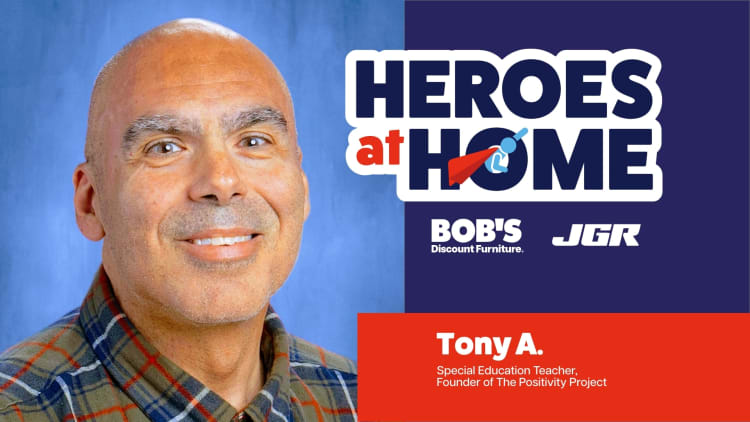
Tony ApuzziWestchester County, NY Special Education teacher, Port Chester High SchoolFounder of The Positivity Project
For New York-based special education teacher Tony Apuzzi, the seeds of his mentorship nonprofit, The Positivity Project, were sown in 2001, when he began to reward students for achieving their goals with pieces from his prized sports memorabilia collection — almost 25 years later, he’s grown the organization into one that connects his students with inspiration from successful athletes imparting academic and life lessons alike.
What drew you to this kind of work? What do you enjoy most about your work or volunteer service?
I started teaching in 1998. My entire career I’ve always worked with at-risk, inner city kids and [for a span of time] court-adjudicated kids — a lot of whom didn’t see a value in education. They were talking about dropping out, and I wanted to find a way to get them to understand how important education is. It’s one thing coming from me, but it’s a whole other thing when it’s coming from individuals [like athletes] that they look up to and follow.
I’m a massive autograph collector — when I first started teaching I was trying to find ways to connect with my students and encourage them to do their homework. I started using sports memorabilia as a reward system for my students, and every time they met academic or social goals they would earn something. That morphed into me reaching out to sports teams to get tickets for kids to go to games — we were able to take them to Yankees, Mets, Islanders, Knicks, Liberty games. [It was then that] I started making acquaintances with a lot of these athletes.
One day, I was at a conference at the New York Institute for Special Education (NYI) and I was listening to Christy Rampone, who was the captain of the U.S. Women’s Olympic soccer team. She was talking about how it’s a challenge to get her kids to do their homework, and as she was talking, I kept thinking, I wish my students could hear her talk. At the end of the night, I had a conversation with her and mentioned that my students were a lot like her kids — I have trouble getting them to do their homework and come to school — and I asked if we could videotape a little message to them. She said, ‘Yeah, let’s do that’ and the kids really enjoyed it. I started thinking, Can I do more of these? And that’s where the idea for the Positivity Project came up — because these people are positive role models, these are people that kids look up to.
I’ve also always had a background in photography, and I’ve shot a lot of MLB, NFL, NHL games, and I started reaching out to venues asking if we could get credentials so that they could come in and ask questions — and that’s what we’ve been doing now.
The thing I enjoy most is helping kids that need positive role models in their life — helping them reach their goals, and move far beyond what their goals are. For a lot of my kids, graduating high school is a huge goal and getting into college is an even bigger goal. Getting them past high school and getting them into college and seeing them succeed is one of the things that I love about my job.
Can you share a moment or experience that made you especially proud?
The one that is the most meaningful to me — when I was [teaching] in the South Bronx at Paul Laurence Dunbar, I had a kid who had just lost both her parents and she was being raised by her grandmother. She had made a promise to her grandfather before he died that she would become the first person in the family to graduate college, and her grandmother asked me if I would help her reach that goal. The trust that her grandmother had in me to help her granddaughter was something that I was really proud of — and she not only graduated from high school, she also graduated from college with an undergrad and graduate degree.
What and/or who has influenced or inspired the way you serve others?
In a way, it’s a stress reliever. When I’m under a lot of stress, working with the kids makes me forget what’s going on in my life and keeps me focused on what’s really important. There are little things that pop up in life that are not that important, but working with kids to help them reach their goals — that’s the important stuff.
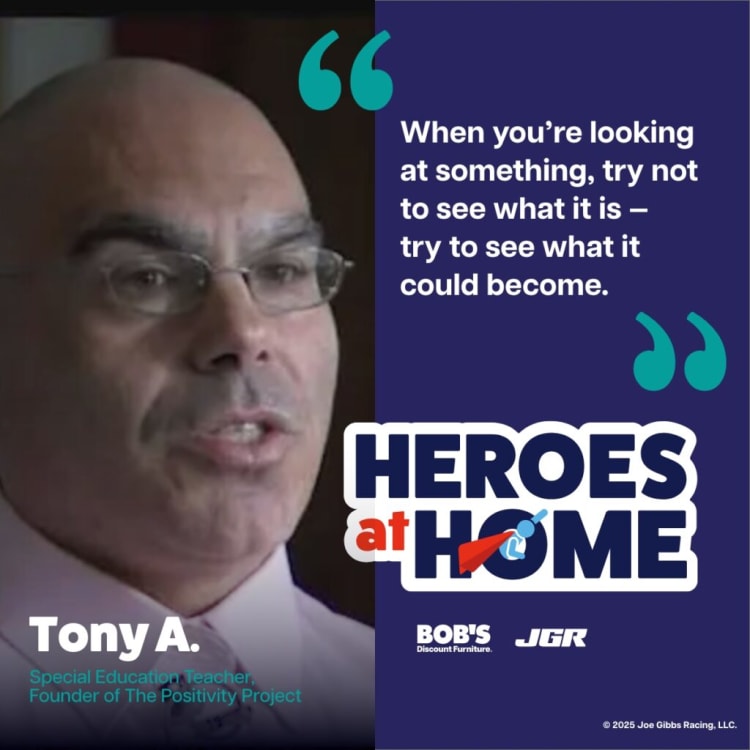
The biggest influence in my life would probably be Alphonsina Torelli. She taught me the greatest lesson in my life — when you’re looking at something, try not to see what it is — try to see what it could become. That’s a lesson I’ve taken through all my years of teaching. I’ve stayed focused on what these kids can become —who knows if they’re going to be senators or presidents or doctors or lawyers, you know?
What’s one thing you wish more people knew about the work you do or the people you serve?
The African proverb, ‘It takes a village to raise a child,’ is a very true thing. I just wish more people knew that if they’d get involved and become role models for kids in their communities, we’d be living in a much better world.
If you could give one message of encouragement to your community, what would it be?
It’s so important to surround yourself with positive role models and positive people — because when you do that, it’s more than likely that positive things are going to happen. It’s really important to make sure that there’s positive influences around you at all times, so that you have people steering you in the right direction.
If you were a piece of furniture, what would you be — and why?
A sectional would represent me, because it would take into account the different sections of my life — one section would be my youth, teenage years, my twenties, and my career.
Do you have any “core furniture memories”?
My grandfather’s army blanket — he fought in World War II and when he passed away I got his army blanket.
In your opinion — what’s the best way to build a furniture fort?
That’s easy — take about seven to eight sectionals and pile them on top of each other!